Home›Areas of practice›Cheque bounce
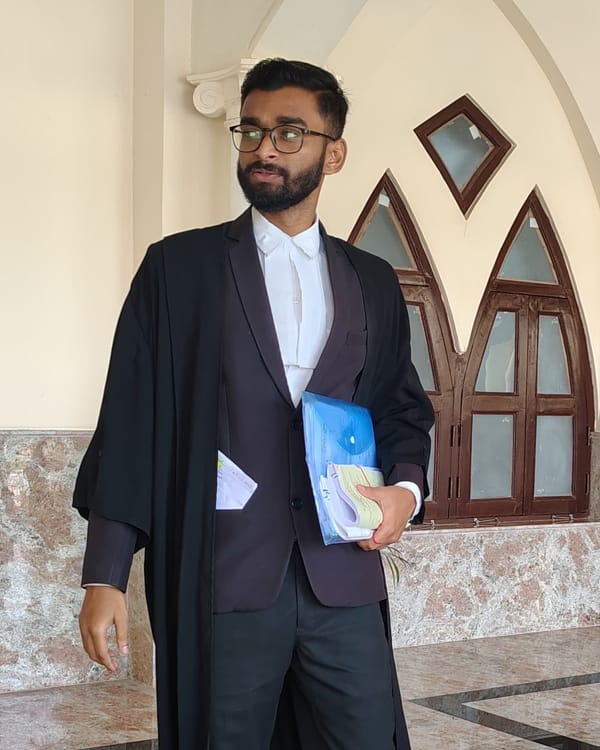
Cheque Bounce Lawyer in Jalpaiguri
Satyajit Paul, Advocate · Calcutta High Court, Circuit Bench at Jalpaiguri
Satyajit Paul appears in cheque dishonour cases under section 138 of the Negotiable Instruments Act arising from Jalpaiguri, Siliguri and the other districts under the Circuit Bench at Jalpaiguri, for complainants and for accused persons. This page explains the notice, complaint, trial and appeal stages in general terms and lists the matters in which he accepts briefs.
This page is general legal information published in keeping with Bar Council of India rules, which permit an advocate's website to state his areas of practice. It is not legal advice and does not create a lawyer-client relationship. Every case turns on its own facts.
Cheque bounce matters handled
Satyajit Paul is enrolled with the Bar Council of West Bengal and practises at the Calcutta High Court, Circuit Bench at Jalpaiguri. In cases of dishonoured cheques under the Negotiable Instruments Act, 1881 he accepts briefs for the payee who holds the cheque and for the person accused of issuing it, in the following matters:
- Drafting and sending the statutory demand notice under section 138(b), and replies to such notices
- Complaints under section 138 before the Judicial Magistrate, and their defence
- Complaints involving companies, partnership firms and their directors or partners (section 141)
- Applications for interim compensation under section 143A, and opposition to them
- Applications for condonation of delay in filing a complaint (proviso to section 142(1)(b))
- Compounding and settlement under section 147, including before the Lok Adalat
- Criminal appeals against conviction or acquittal, and deposit orders under section 148
- Criminal revisions and petitions to quash complaints before the Circuit Bench at Jalpaiguri
- Civil suits for recovery of money founded on a dishonoured cheque or promissory note
What section 138 makes an offence
Section 138 of the Negotiable Instruments Act punishes the drawer of a cheque when all of the following are true:
- The cheque was drawn on an account maintained by the drawer, to pay money to another person;
- It was given in discharge, in whole or in part, of a legally enforceable debt or other liability. A cheque given as a gift or a donation is outside the section;
- It was presented to the bank within its period of validity, which since 1 April 2012 is three months from the date written on it under Reserve Bank of India directions;
- The bank returned it unpaid because the funds were insufficient, or because the amount exceeded an arrangement with the bank. Returns marked "account closed" or "payment stopped" are also usually covered;
- The payee sent a written demand within thirty days of learning of the dishonour; and
- The drawer did not pay the cheque amount within fifteen days of receiving that demand.
The punishment is imprisonment for up to two years, or a fine of up to twice the cheque amount, or both. In practice, courts usually direct that the fine, or a large part of it, be paid to the complainant as compensation.
The presumption in favour of the holder. Section 139 presumes, unless the contrary is proved, that the holder received the cheque for the discharge of a debt or liability. In Rangappa v. Sri Mohan (2010) the Supreme Court held that the presumption under section 139 extends to the existence of a legally enforceable debt, and that the accused can rebut it on a preponderance of probabilities: for example, by showing that the complainant had no means to lend the sum claimed, or that a blank security cheque was misused. In Sanjabij Tari v. Kishore S. Borcar (2025) the Court held that a cash loan of twenty thousand rupees or more does not stop being a legally enforceable debt merely because it was given in breach of section 269SS of the Income-tax Act, 1961.
The notice and complaint timeline
Dates decide many of these cases. The usual sequence is:
| Step | Time allowed | Provision |
|---|---|---|
| Present the cheque to the bank | Within three months of the date on the cheque | Section 138(a); RBI directions |
| Send the written demand notice | Within 30 days of receiving the bank's return memo | Section 138(b) |
| Drawer's time to pay | 15 days from the drawer's receipt of the notice | Section 138(c) |
| File the complaint | Within one month from the day after those 15 days end | Section 142(1)(b) |
A cheque that has bounced may be presented again within its validity, and a fresh notice may follow a fresh dishonour. Where a complaint is filed after the one-month period, the Magistrate may still take cognizance if the complainant shows sufficient cause for the delay, under the proviso to section 142(1)(b) added in 2002.
A complaint filed before the fifteen days have run out is premature, because no offence has yet been committed.
Legal notice for cheque bounce
The demand notice is the foundation of the case. It must be in writing, must demand payment of the cheque amount, and must reach the drawer, or be sent to his correct address, within the thirty days. A notice sent by registered post to the correct address is ordinarily deemed served even if it is returned "refused" or "unclaimed", under the presumption in section 27 of the General Clauses Act, 1897.
A good notice states the cheque number, date, amount and bank, the date and reason of the return, the transaction for which the cheque was given, and a clear demand for the cheque amount. If the notice demands a different or inflated sum without separating the cheque amount, the accused may argue that it is not a valid notice.
A person who receives such a notice should reply promptly, putting any defence (prior repayment, misuse of a security cheque, no debt) on record.
Cheque bounce case: in which court?
A section 138 complaint is a private criminal complaint, filed by the payee or holder in due course in writing (section 142(1)(a)). It is tried by a Judicial Magistrate of the First Class; no FIR is registered.
Territorial jurisdiction. In Dashrath Rupsingh Rathod v. State of Maharashtra (2014) the Supreme Court held that the complaint had to be filed where the drawer's bank was situated. Parliament reversed that position by the Negotiable Instruments (Amendment) Act, 2015, which inserted section 142(2). Now:
- if the cheque was delivered for collection through an account, the complaint lies in the court within whose local limits the branch of the payee's bank where the payee maintains the account is situated; and
- if the cheque was presented for payment over the counter, the complaint lies where the drawer's branch is situated.
Section 142A, inserted by the same amendment, keeps all later complaints against the same drawer in the court where the first one is pending. So a payee banking at a Jalpaiguri town branch ordinarily files before the Judicial Magistrate at Jalpaiguri, even if the drawer lives in Siliguri or Cooch Behar.
How the trial runs
- Complaint and pre-summoning evidence. The complaint is filed with the original cheque, the return memo, a copy of the notice, postal receipts and proof of delivery. The complainant's evidence at this stage may be given on affidavit (section 145). Where the accused lives outside the court's territorial limits, an inquiry before summons is required, a point the Supreme Court stressed in In Re: Expeditious Trial of Cases under Section 138 of the N.I. Act (2021).
- Summons. If the Magistrate finds a case, the accused is summoned, including by electronic means under the Supreme Court's 2025 directions.
- Appearance and plea. The accused appears, usually furnishes bail (the offence is bailable), and the substance of the accusation is explained. If he does not plead guilty, the case goes to evidence.
- Interim compensation. Under section 143A, inserted in 2018, the court may direct the accused to pay interim compensation of up to twenty per cent of the cheque amount within sixty days (extendable by thirty days). If the accused is later acquitted, the complainant must repay it with interest. The power is discretionary and applies only to offences committed after 1 September 2018.
- Evidence and judgment. Section 143 requires these cases to be tried summarily as far as possible, and section 143(3) asks for the trial to be completed within six months.
Cheques signed for a company or firm
When the drawer is a company, a partnership firm or another association of persons, section 141 makes every person who was in charge of, and responsible to, the company for the conduct of its business at the time liable along with the company. Directors who sign the cheque are directly liable. Other directors are liable only if the complaint specifically states how they were in charge of the business; a bare repetition of the words of the section has often been held insufficient, and such complaints are frequently quashed by the High Court. A person otherwise covered escapes liability if he proves that the offence was committed without his knowledge or that he exercised all due diligence to prevent it (first proviso), and a director nominated by the Government or a Government financial corporation is excluded (second proviso). Under the Supreme Court's decision in Aneeta Hada v. Godfather Travels (2012), the company itself must ordinarily be made an accused for its directors to be prosecuted.
Compounding, settlement and the Lok Adalat
The offence is compoundable under section 147, which means the complainant and accused may settle it at any stage, including after conviction and in appeal. In Meters and Instruments Pvt. Ltd. v. Kanchan Mehta (2017) the Supreme Court said that the offence is primarily civil in character and that a court may close the proceedings where the complainant has been fully compensated, even without his consent, in a suitable case.
Under the Supreme Court's 2025 directions in Sanjabij Tari, settlement before the defence evidence is recorded attracts no costs; later settlement may attract an additional percentage of the cheque amount, rising at each stage.
Cheque bounce case in Lok Adalat. Pending section 138 cases are regularly placed before the National Lok Adalat held on dates notified by the National Legal Services Authority across West Bengal, including at Jalpaiguri, Siliguri and the other North Bengal court complexes. A settlement recorded there becomes an award under section 21 of the Legal Services Authorities Act, 1987. It is final and enforceable like a civil decree.
Appeals, revisions and the role of the Circuit Bench
- Appeal against conviction. The convicted accused appeals to the Court of Session under the Bharatiya Nagarik Suraksha Sanhita, 2023 (BNSS), which replaced the Code of Criminal Procedure from 1 July 2024. Under section 148 of the NI Act the appellate court may direct him to deposit at least twenty per cent of the fine or compensation awarded, within sixty days, extendable by thirty days. In Surinder Singh Deswal v. Virender Gandhi (2019) the Supreme Court held that this applies to appeals even in complaints filed before the 2018 amendment.
- Appeal against acquittal. In Celestium Financial v. A. Gnanasekaran (2025) the Supreme Court held that a cheque-bounce complainant is a "victim" and may therefore appeal against an acquittal to the court that hears appeals against conviction, without first seeking special leave from the High Court.
- Revision. Appellate orders of the Sessions Court may be challenged in revision before the High Court.
- Quashing. The High Court's inherent power, now in section 528 of the BNSS (formerly section 482 of the Code of Criminal Procedure), is used to quash complaints that disclose no offence, are barred by limitation, rest on an invalid notice, or wrongly implicate directors.
For cases arising in Darjeeling (including Siliguri), Kalimpong, Jalpaiguri, Alipurduar and Cooch Behar, these High Court proceedings are heard by the Calcutta High Court, Circuit Bench at Jalpaiguri.
Cheating, civil suits and other routes
Cheque bounce case under the BNS. There is no separate cheque bounce offence in the Bharatiya Nyaya Sanhita, 2023; section 138 of the Negotiable Instruments Act remains the governing provision. A complaint of cheating under section 318 of the BNS (formerly section 420 of the Indian Penal Code) can lie in addition only where the drawer intended to deceive from the outset, for instance by handing over a cheque on an account he knew was already closed.
Civil recovery. The payee may also file a civil suit for recovery of the money, including a summary suit under Order XXXVII of the Code of Civil Procedure. It may run alongside the criminal complaint.
Not a consumer court matter. A dishonoured cheque between a lender and a borrower, or a buyer and a seller, is not such a complaint. A consumer complaint may lie only against a bank, if the bank itself wrongly dishonoured a cheque or mishandled its collection.
Documents usually needed
- The original dishonoured cheque (never part with it except to the court)
- The bank's return memo, and the bank statement showing deposit and return
- The demand notice, postal receipts, tracking report and acknowledgment card, or the returned envelope
- Any reply received from the drawer
- Proof of the underlying transaction: loan agreement, invoices, ledger, delivery challans, bank transfers, messages
- For an accused: the summons, complaint copy and any document showing payment or misuse of the cheque
Frequently asked questions
Cheque bounce case: in which court is it filed?
A section 138 complaint is filed before the Judicial Magistrate. Since the 2015 amendment, section 142(2) of the Negotiable Instruments Act places it in the court within whose limits the payee's bank branch, where the payee keeps the account, is situated. For an account held in Jalpaiguri town, that is ordinarily the Judicial Magistrate's court at Jalpaiguri.
What is the time limit for sending a legal notice for cheque bounce?
The written demand must be sent within thirty days of receiving the bank's return memo. The drawer then has fifteen days from receiving the notice to pay. If he does not, the complaint must be filed within one month after those fifteen days end, though the Magistrate may condone a delay for sufficient cause.
Is cheque bounce an offence under the BNS?
No separate cheque bounce offence exists in the Bharatiya Nyaya Sanhita, 2023. The offence remains under section 138 of the Negotiable Instruments Act, 1881. A cheating case under section 318 of the BNS is possible only where the drawer meant to deceive from the start.
Can a cheque bounce case be filed in the consumer court?
No. A dispute about a dishonoured cheque between a lender and borrower, or a buyer and seller, goes to the Magistrate under section 138, or to the civil court for recovery.
Can a cheque bounce case be settled in the Lok Adalat?
Yes. The offence is compoundable under section 147 of the Negotiable Instruments Act, and pending cases are regularly placed before the National Lok Adalat. A settlement recorded there is an award under section 21 of the Legal Services Authorities Act, 1987, final and enforceable like a civil decree.
Does an appeal against conviction require a deposit?
Under section 148 of the Negotiable Instruments Act the appellate court may direct the convicted person to deposit at least twenty per cent of the fine or compensation awarded by the trial court.
What does the High Court do in cheque bounce cases?
The High Court hears criminal revisions against appellate orders, petitions under section 528 of the Bharatiya Nagarik Suraksha Sanhita to quash defective complaints. For Darjeeling, Kalimpong, Jalpaiguri, Alipurduar and Cooch Behar these are heard at the Calcutta High Court, Circuit Bench at Jalpaiguri, where Satyajit Paul practises.
The answers above describe the law in general terms as on the date of publication and may not reflect later amendments or judgments. They are not a substitute for advice on the facts of a particular case.
Contact
Chamber at Santipara Bus Stand, Jalpaiguri, West Bengal 735101. Monday to Saturday, 10:00 to 22:00, by appointment. English, Bengali and Hindi.