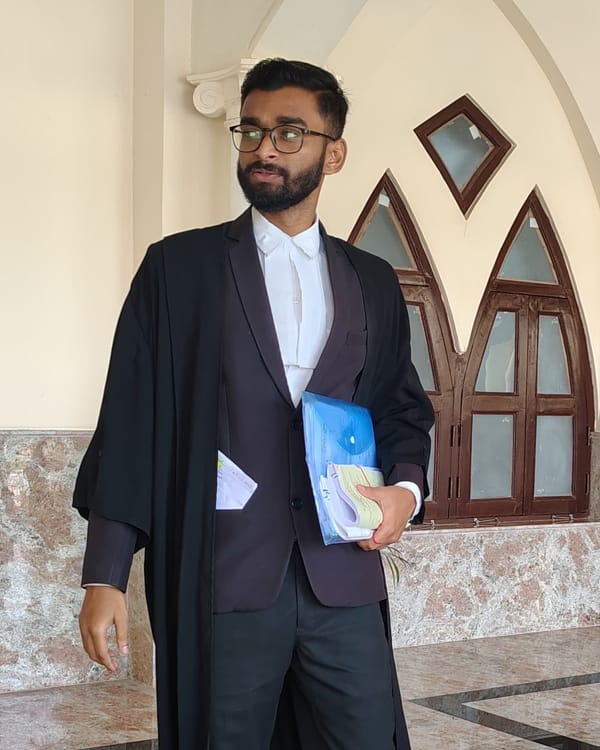
Lawyer in Cooch Behar
Satyajit Paul, Advocate · Calcutta High Court, Circuit Bench at Jalpaiguri
Cooch Behar district falls within the jurisdiction of the Circuit Bench of the Calcutta High Court at Jalpaiguri, where Satyajit Paul practises. Unlike some neighbouring districts, Cooch Behar has a court complex in every one of its subdivisions. This page sets out which complex hears which police station's cases and how a matter travels from there to the High Court.
This page is general information about courts and procedure, published in keeping with Bar Council of India rules, which permit an advocate's website to state his areas of practice. It is not legal advice and does not create a lawyer-client relationship.
The district
Cooch Behar was a princely state under the Koch rulers until it acceded to India; on 1 January 1950 it became a district of West Bengal. The town is a planned heritage town built around the palace and the Sagar Dighi. The district has five subdivisions: Cooch Behar Sadar, Dinhata, Mathabhanga, Tufanganj and Mekhliganj. It shares a long border with Bangladesh and, until 2015, contained most of the Bangladeshi enclaves (chhitmahals) inside India; the 51 enclaves that came to India under the Land Boundary Agreement were all in this district.
Five court complexes and the police stations they cover
Each subdivision has its own court complex, so most people in the district do not need to travel to Cooch Behar town for a magistrate's case. The judgeship's police-station-wise list allots criminal cases as follows:
| Court complex | Police stations | Magistrate |
|---|---|---|
| Cooch Behar Sadar | Kotwali, Sadar Women PS, Pundibari | Chief Judicial Magistrate |
| Dinhata | Dinhata, Dinhata Women PS | Additional CJM I |
| Dinhata | Sitai, Sahebganj | Additional CJM II |
| Mathabhanga | Mathabhanga, Ghoksadanga, Sitalkuchi | Additional CJM |
| Tufanganj | Tufanganj, Baxirhat | Additional CJM |
| Mekhliganj | Mekhliganj, Kuchlibari, Haldibari | Additional CJM |
The subdivisional complexes are not only magistrates' courts. According to the judgeship's list of judges, each of Dinhata, Mathabhanga, Tufanganj and Mekhliganj also has an Additional District and Sessions Judge and a Civil Judge (Junior Division) who also acts as Judicial Magistrate; Dinhata additionally has a Civil Judge (Senior Division) and a second Judicial Magistrate. Sessions trials, civil suits and many appeals can therefore be heard in the subdivision itself.
The Sadar courts at Cooch Behar
The District and Sessions Judge's court is at Cooch Behar town (PIN 736101). Alongside it sit two Additional District and Sessions Judges, an Additional District and Sessions Judge (Fast Track Court), a Civil Judge (Senior Division), the Chief Judicial Magistrate, a Judicial Magistrate, two Civil Judges (Junior Division) and the Juvenile Justice Board. The District Legal Services Authority, which arranges legal aid and Lok Adalats, also works from here.
Typical matters in Cooch Behar
Several kinds of dispute come up in Cooch Behar more often than elsewhere in North Bengal:
- Land in the former enclaves. Residents of the former chhitmahals, which became Indian territory on 31 July 2015, have had to obtain records of rights, mutation and other land documents from scratch. Delays or refusals by land and land-revenue offices are usually taken up by writ petition under Article 226.
- Border-area criminal cases registered at police stations along the Bangladesh border, including cases under the Bharatiya Nyaya Sanhita, 2023 and special statutes, where bail and anticipatory bail often reach the High Court.
- Agricultural land: partition, declaration of title and injunction suits over family land, and appeals from them.
- Service matters of teachers and government employees, which are brought before the High Court by writ.
- Matrimonial cases, maintenance under section 144 of the Bharatiya Nagarik Suraksha Sanhita, 2023 (BNSS) and Domestic Violence Act applications.
Appeals and writs at Jalpaiguri
Cooch Behar is one of the five districts (with Darjeeling, Kalimpong, Jalpaiguri and Alipurduar) whose High Court cases are filed at the Circuit Bench at Jalpaiguri. These include:
- criminal appeals under section 415 BNSS against convictions by a Sessions or Additional Sessions Judge, whether at Cooch Behar or in a subdivision, and criminal revisions under section 442 BNSS;
- regular bail in the High Court (section 483 BNSS), usually after a Sessions Court rejection, and pre-arrest bail (section 482 BNSS);
- petitions under section 528 BNSS to quash an FIR or complaint;
- civil first appeals (section 96, Code of Civil Procedure) and second appeals (section 100), and revisions against interim orders (section 115 CPC or Article 227 of the Constitution);
- appeals in matrimonial cases and transfer petitions under section 24 CPC, for example to move a case from Mekhliganj to Cooch Behar, or from another district into Cooch Behar; and
- writ petitions under Article 226, including land-record, service and police-inaction matters.
Time limits are strict. An appeal to the High Court from a civil decree must ordinarily be filed within ninety days, and a criminal appeal within sixty days, under the Limitation Act, 1963, excluding the time spent obtaining certified copies.
Matters handled
Satyajit Paul's briefs from Cooch Behar district are Circuit Bench matters: writs over enclave land records, service and police action; criminal appeals, revisions and High Court bail; quashing petitions; civil appeals and revisions; matrimonial appeals and transfer petitions; and drafting. Trial work in the Cooch Behar and subdivisional courts is handled by counsel practising in those courts.
Distance to Jalpaiguri
By road, Cooch Behar town and Jalpaiguri are something like 95 to 110 km apart, a journey of two hours or a little more. Mekhliganj and Haldibari sit on the district's western edge next to Jalpaiguri district and are nearer. Sending copies of the orders and pleadings in advance means a single visit to the Jalpaiguri chamber is usually enough to begin.
Frequently asked questions
Where is the district court in Cooch Behar?
The District and Sessions Judge's court is in Cooch Behar town (PIN 736101). The judgeship also has court complexes at Dinhata, Mathabhanga, Tufanganj and Mekhliganj.
My case is from Sitalkuchi police station. Which court will hear it?
Under the judgeship's police-station-wise list, Sitalkuchi, Mathabhanga and Ghoksadanga police stations are listed before the Additional CJM sitting in the Mathabhanga court complex.
Is Haldibari covered by the Cooch Behar court or Mekhliganj?
Haldibari police station is allotted to the Additional Chief Judicial Magistrate at the Mekhliganj court complex, together with Mekhliganj and Kuchlibari police stations.
Where does a High Court case from Cooch Behar go?
To the Calcutta High Court, Circuit Bench at Jalpaiguri, which has jurisdiction over Cooch Behar, Jalpaiguri, Alipurduar, Darjeeling and Kalimpong districts. Appeals, High Court bail, quashing and writ petitions from Cooch Behar are filed there.
Can a land-record problem in a former enclave be taken to the High Court?
Where a land or land-revenue office refuses or delays a record of rights, mutation or similar document without lawful reason, a writ petition under Article 226 of the Constitution may lie before the High Court, usually after the statutory remedies have been tried. Whether it is the right step depends on the facts and the papers.
How can a Cooch Behar resident contact Satyajit Paul?
Use +91 80010 37594 for a call or a WhatsApp message, or email advocatesatyajitpaul@gmail.com. His practice is at the Circuit Bench, with the chamber near Santipara Bus Stand in Jalpaiguri; there is no Cooch Behar office.
The court complexes, posts and allotments above follow the Cooch Behar judgeship's website as it stood in October 2026. Officers are transferred and lists are redrawn, so confirm with the current cause list. No part of this page is advice on a specific case.
Contact
Chamber at Santipara Bus Stand, Jalpaiguri, West Bengal 735101. Monday to Saturday, 10:00 to 22:00, by appointment. English, Bengali and Hindi.