Home›Areas of practice›Court marriage
Court Marriage Lawyer in Siliguri
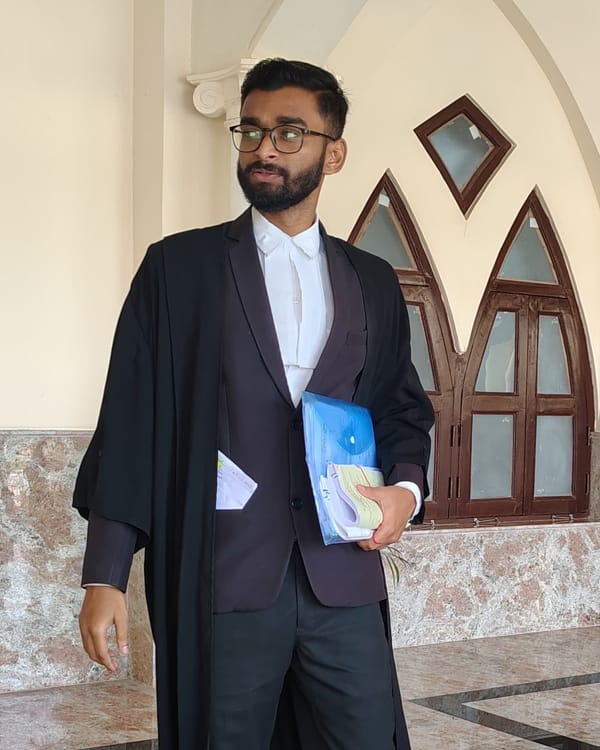
Satyajit Paul, Advocate · Calcutta High Court, Circuit Bench at Jalpaiguri
Satyajit Paul advises couples from Siliguri and the rest of Darjeeling and Jalpaiguri districts on marriage under the Special Marriage Act, registration of Hindu marriages in West Bengal, and petitions to the High Court for couples who face threats from family or others. This page explains the court marriage process in Siliguri in general terms and lists the matters in which he accepts briefs.
This page is general legal information published in keeping with Bar Council of India rules, which permit an advocate's website to state his areas of practice. It is not legal advice and does not create a lawyer-client relationship. The procedure described is as of October 2026; the State's online process and office arrangements can change.
Marriage matters handled
Satyajit Paul is enrolled with the Bar Council of West Bengal and practises at the Calcutta High Court, Circuit Bench at Jalpaiguri, whose jurisdiction includes Siliguri. In marriage-related matters he accepts briefs in the following:
- Advice on the Special Marriage Act, 1954 process, eligibility and documents
- Drafting of the declarations and affidavits that accompany a notice of intended marriage
- Registration of marriages already solemnised, under section 15 of the Special Marriage Act or section 8 of the Hindu Marriage Act
- Replies to objections raised before the Marriage Officer, and appeals against a refusal to solemnise
- Writ petitions to the High Court for police protection of couples facing threats
- Habeas corpus petitions where an adult partner is confined by family members
- Petitions to quash FIRs of kidnapping or similar offences lodged against a consenting adult couple
What "court marriage" means
"Court marriage" is the popular name for a civil marriage solemnised and registered under the Special Marriage Act, 1954. It does not take place in a courtroom and no judge is involved. The marriage is solemnised before a Marriage Officer appointed by the State Government, in the presence of three witnesses, after a public notice period. The Act is open to any two persons in India whatever their religion, so it is used both by inter-faith couples and by couples of the same faith who prefer a civil ceremony.
In West Bengal the process is run through the State's online marriage registration system, MARREG, under the Registrar General of Marriages. Marriage Officers include ex-officio and non-official (licensed) Marriage Officers; the portal lets applicants find the Marriage Officer for their locality by police station. People who search for a "Siliguri court marriage office" are usually looking for this Marriage Officer, not for a court.
Who can marry under the Special Marriage Act
Section 4 sets the conditions. At the time of marriage:
- neither party has a spouse living;
- both are capable of giving valid consent and are not suffering from a mental disorder that makes them unfit for marriage;
- the man has completed 21 years and the woman 18 years of age; and
- the parties are not within the degrees of prohibited relationship listed in the First Schedule, unless a custom governing at least one of them permits the marriage.
Parental consent is not required. A person who was married before must show that the earlier marriage has ended, by a divorce decree or the spouse's death certificate.
Court marriage process in Siliguri, step by step
- Choose the right Marriage Officer. Under section 5, notice is given to the Marriage Officer of the district in which at least one of the parties has resided for at least 30 days immediately before the notice. Siliguri lies mostly in Darjeeling district, but several wards of the Siliguri Municipal Corporation fall in Jalpaiguri district. Which district a party lives in decides which Marriage Officer is competent.
- Give notice of intended marriage. The notice is submitted online through MARREG with the parties' details, photographs and supporting documents, and the prescribed government amount is paid through the State's GRIPS payment system.
- Publication. Under section 6 the Marriage Officer enters the notice in the Marriage Notice Book and publishes it by affixing a copy at a conspicuous place in the office. If either party lives permanently in another district, a copy is sent to the Marriage Officer of that district for publication there as well.
- Thirty-day objection period. Any person may object within 30 days of publication on the ground that the marriage would contravene a condition in section 4 (see the next section).
- Declaration and solemnisation. After the 30 days expire, the parties and three witnesses sign the declaration in the Third Schedule before the Marriage Officer (section 11). The marriage may be solemnised in any form the parties choose, but each party must say to the other, before the Officer and the witnesses, the words of acceptance set out in section 12. Under the MARREG instructions the parties and three witnesses appear in person with original photo identity documents, and signatures are taken digitally.
- Certificate. The Marriage Officer enters the certificate in the Marriage Certificate Book (section 13). It is conclusive evidence that the marriage was solemnised under the Act. In West Bengal a digitally signed copy is e-mailed to the parties and printed copies are issued.
- Three-month validity. If the marriage is not solemnised within three months from the date of the notice, a fresh notice has to be given.
Objections and the 30-day notice period
Section 7 allows an objection only on the ground that the marriage would breach one of the conditions in section 4: an existing spouse, lack of capacity, under-age, or prohibited relationship. Disapproval by parents, difference in religion or caste, or family reputation are not legal grounds.
If an objection is received, the Marriage Officer cannot solemnise the marriage until he has inquired into it, which he must do within 30 days (section 8). If he upholds the objection, either party may appeal to the District Court within the local limits of whose jurisdiction the Officer has his office, within 30 days.
The public notice is the stage at which many couples first face pressure, because families learn of the intended marriage from it. Where there is a real risk of violence, protection can be sought before or during the notice period, as explained below.
Registering a Hindu marriage in West Bengal
Couples who have already married by Hindu rites (applicable also to Buddhists, Jains and Sikhs) do not need a fresh civil ceremony. Their marriage is valid once solemnised with the customary ceremonies (section 7, Hindu Marriage Act, 1955). Registration under section 8 provides proof of the marriage, which is needed for passports, visas, bank and insurance nominations, and matrimonial proceedings.
- The application is made online through MARREG to a Hindu Marriage Registrar, both parties being Hindus who are already married.
- According to the MARREG instructions, the application can be submitted at least 30 days after the date of marriage, there is a 30-day period for objections from the date the application is received, and registration is to be completed within six months of the application.
- Both spouses appear with three witnesses carrying original photo identity proof.
A marriage solemnised in some other form can also be registered under section 15 of the Special Marriage Act, which requires that the parties have lived together as husband and wife since the ceremony, meet the conditions of the Act, and that at least one of them has lived in the district for 30 days before the application. Once registered under section 15 it is treated as a marriage under the Special Marriage Act.
Inter-faith couples
The Special Marriage Act exists precisely so that two people of different religions can marry without either converting. Some points to note:
- No conversion is needed, and each spouse keeps his or her own religion. A conversion made only for the purpose of marriage can create legal complications later, and is unnecessary under this Act.
- Succession to the property of a person married under the Act is generally governed by the Indian Succession Act, 1925 (section 21). Where both spouses are Hindus, Buddhists, Sikhs or Jains, section 21A preserves the application of Hindu law.
- Divorce for such a marriage is under sections 27 and 28 of the Special Marriage Act, not under either party's personal law.
- The Supreme Court has repeatedly held that an adult's choice of a life partner is part of the right to life and liberty under Article 21. In Lata Singh v. State of U.P. (2006) it directed police to ensure that couples in inter-caste or inter-religious marriages are not harassed, and in Shakti Vahini v. Union of India (2018) it laid down preventive, remedial and punitive measures against interference with such marriages.
Documents usually needed
- Proof of age of each party: birth certificate, Madhyamik (secondary) admit card or certificate, or passport
- Proof of address showing 30 days' residence in the district: Aadhaar, voter card, passport, or a rent agreement with utility bill
- Recent passport-size photographs of both parties
- Declaration of marital status (unmarried, divorced or widowed), and the divorce decree or death certificate if previously married
- For registration of a marriage already solemnised: proof of the ceremony, such as photographs and the invitation card
- Identity proof and address of three witnesses, who must be present in person
- For a foreign national: passport and visa, and any certificate of no impediment required by his or her country
Protection petitions to the High Court Circuit Bench
Couples who marry against the wishes of their families sometimes face threats, violence, or false criminal complaints. The law gives several remedies, and the High Court, which for Siliguri sits at the Circuit Bench at Jalpaiguri, is the forum for most of them.
- Representation to the police. A written request for protection, with copies of the marriage certificate and proof of age, is first sent to the police. Siliguri falls under the Siliguri Metropolitan Police Commissionerate; areas outside it come under the Superintendent of Police of the district concerned.
- Writ petition for protection. If the police do not act, or the threat is serious, the couple can file a writ petition under Article 226 asking the High Court to direct the police to protect their life and liberty. The petition sets out the marriage, the ages of the parties, the threats received and the representation already made. Such petitions can be mentioned for early listing.
- Habeas corpus. Where one partner is being kept confined by relatives against his or her will, a habeas corpus petition asks the High Court to direct that the person be produced, so that the Court can ascertain his or her wishes.
- Quashing of false cases. Families sometimes lodge an FIR alleging kidnapping (section 137 of the Bharatiya Nyaya Sanhita, 2023) or kidnapping to compel marriage (section 87) against a partner who has married an adult of his or her own choice. The High Court can quash such proceedings under section 528 of the Bharatiya Nagarik Suraksha Sanhita, 2023, and can protect the accused partner meanwhile. Threats themselves may amount to criminal intimidation under section 351 of the Bharatiya Nyaya Sanhita.
Proof of age is central to all of these remedies. Where either party is below the marriageable age, the position is very different, and the courts will not protect what the law does not permit.
Frequently asked questions
What is the court marriage process in Siliguri?
A court marriage is a civil marriage under the Special Marriage Act, 1954. One of the parties must have lived in the district for at least 30 days. Notice is given online through West Bengal's MARREG system to the Marriage Officer for that area, the notice is published for 30 days, and if there is no valid objection the marriage is solemnised before the Marriage Officer with three witnesses, after which a marriage certificate is issued. The marriage must take place within three months of the notice.
How long does a court marriage take in West Bengal?
At least 30 days from the notice, because of the statutory objection period, and it must be completed within three months of the notice. If an objection is filed, the Marriage Officer has 30 days to inquire into it, which can add time.
Can parents stop a court marriage by objecting?
Only if the objection shows that a legal condition is not met: for example, that one party is already married, is under age, lacks capacity to consent, or that the parties are within prohibited degrees of relationship. Parental disapproval, or a difference in religion or caste, is not a legal ground. If the Marriage Officer wrongly upholds an objection, an appeal lies to the District Court within 30 days.
Do we need to convert to marry someone of another religion?
No. The Special Marriage Act allows two people of any religion to marry without either of them converting. Each spouse keeps his or her own religion, and matters such as divorce and succession are governed by the Special Marriage Act and the Indian Succession Act, subject to the exceptions in the Act.
We had a Hindu wedding but did not register it. Is the marriage valid?
Yes, a Hindu marriage is valid once it is solemnised with the customary ceremonies. Registration under section 8 of the Hindu Marriage Act is proof of the marriage, and in West Bengal it is done online through MARREG with a Hindu Marriage Registrar, with both spouses and three witnesses appearing in person.
Which Marriage Officer is competent if we live in Siliguri?
It depends on the district in which one of you has lived for at least 30 days. Most of Siliguri is in Darjeeling district, but some wards of the Siliguri Municipal Corporation are in Jalpaiguri district. The MARREG portal allows a search for the Marriage Officer by police station.
Our families are threatening us after the marriage. What can we do?
First send a written request for protection to the police, with proof of the marriage and of your ages. If that does not work, or the threat is serious, a writ petition can be filed in the Calcutta High Court, which for Siliguri and the rest of North Bengal sits at the Circuit Bench at Jalpaiguri, asking it to direct the police to protect you. If a false FIR has been lodged against either of you, a petition to quash it can be filed under section 528 of the Bharatiya Nagarik Suraksha Sanhita.
The answers above describe the law in general terms as on the date of publication and may not reflect later amendments or judgments. They are not a substitute for advice on the facts of a particular case.
Contact
Chamber at Santipara Bus Stand, Jalpaiguri, West Bengal 735101. Monday to Saturday, 10:00 to 22:00, by appointment. English, Bengali and Hindi.